Published March 5, 2026
What If You’ve Lost Receipts for Home Improvements? How to Reconstruct Your Cost Basis

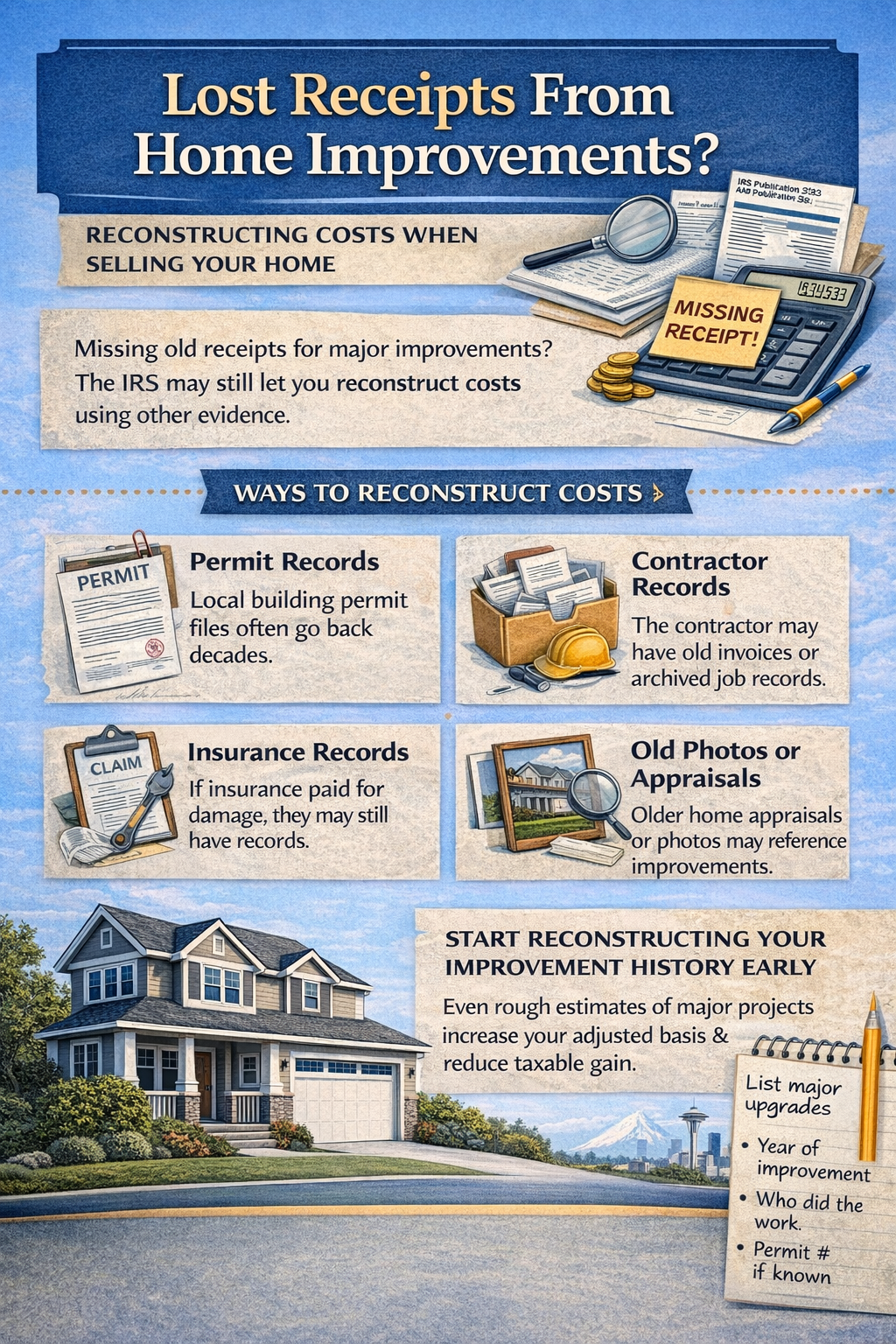
Many homeowners have owned their homes for decades. Over that time they may have replaced roofs, remodeled kitchens, upgraded electrical systems, or completed other major improvements.
Unfortunately, it’s also common for the receipts and invoices for those projects to be long gone.
If you’re preparing to sell your home, you may wonder:
Can I still include those improvements when calculating my adjusted cost basis?
The good news is that in many cases yes—you may still be able to include those costs, even if the original records are missing.
Why Improvement Records Matter
When calculating capital gains on the sale of a home, the IRS allows homeowners to increase their adjusted basis by the cost of certain capital improvements.
Examples include:
- Roof replacements
- Kitchen or bathroom remodels
- Room additions
- HVAC replacements
- Window upgrades
- Electrical or plumbing upgrades
Increasing your basis reduces taxable gain when the home is sold.
Detailed guidance on basis calculations appears in
IRS Publication 523.
Our related article explains which improvements can and cannot be included in your adjusted basis.
What the IRS Requires
The IRS generally expects taxpayers to keep records supporting their tax positions.
However, the tax code recognizes that records are sometimes lost over long periods of time.
In these cases, taxpayers may often reconstruct reasonable estimates of improvement costs using other available evidence.
The key principle is that the estimate should be reasonable and supported by some documentation or corroboration whenever possible.
Ways to Reconstruct Improvement Costs
Homeowners and tax professionals commonly use several approaches to rebuild improvement records.
1. Building Permit Records
Many cities and counties maintain permit records going back decades.
Permit files may show:
- roof replacements
- remodel permits
- additions
- structural improvements
Even if the permit does not list the cost, it can help verify when the improvement occurred.
2. Contractor Records
The contractor who performed the work may still have:
- archived invoices
- accounting records
- job records
Even a brief written statement from the contractor confirming the work and approximate timing can help support the improvement.
3. Insurance Claim Records
If improvements occurred after damage or an insurance claim, insurers may still have records showing:
- claim payouts
- repair estimates
- contractor invoices
Insurance companies often keep these records longer than homeowners.
4. Appraisals or Listing Materials
Older appraisals sometimes reference improvements such as:
- roof age
- remodel dates
- major upgrades
These references can help establish when improvements occurred.
5. Historical Cost Estimates
If the improvement clearly occurred but the cost is uncertain, a tax professional may estimate the cost based on:
- typical construction costs during that time period
- contractor estimates of comparable projects
For example, if a roof replacement in the mid-1990s typically cost $7,000–$12,000, a documented estimate within that range may be reasonable.
Other Helpful Supporting Evidence
Even small pieces of evidence can help support improvement claims, including:
- dated photographs
- old home inspection reports
- contractor advertisements or notes
- emails or letters referencing the project
The goal is to show that the improvement likely occurred and to estimate the cost reasonably.
Why This Matters for Long-Term Homeowners
Many long-time homeowners purchased their homes decades ago at relatively low prices.
Over the years they may have invested significant money in improvements.
For example:
Purchase price (1985):
$180,000
Sale price today:
$950,000
If improvements totaling $200,000 were made over time, those costs may increase the adjusted basis and significantly reduce taxable gain.
Without including those improvements, the homeowner may appear to have a much larger gain than they actually realized.
Start Reconstructing Early
If you are considering selling your home, it’s helpful to begin reconstructing your improvement history early.
You might start by:
- listing major improvements you remember
- estimating the year each occurred
- identifying any permits, contractors, or insurance claims tied to the project
Your tax professional can then help determine which costs can reasonably be included in your adjusted basis.
Final Thoughts
Lost receipts are common for long-term homeowners. Fortunately, missing records do not necessarily mean improvements must be ignored.
In many cases, improvement costs can be reconstructed using permits, contractor records, insurance files, historical estimates, and other documentation.
Working with a knowledgeable tax professional can help ensure your adjusted basis is calculated accurately and that you receive the full tax benefit of improvements made over the life of your home.
And if you haven’t yet reviewed which improvements qualify, be sure to read our companion article explaining which home improvements can and cannot be added to your cost basis when selling a home.