
Published May 20, 2026
Washington Heating Oil Tanks: What Homeowners Need to Know About PLIA and Washington’s New Grant Program

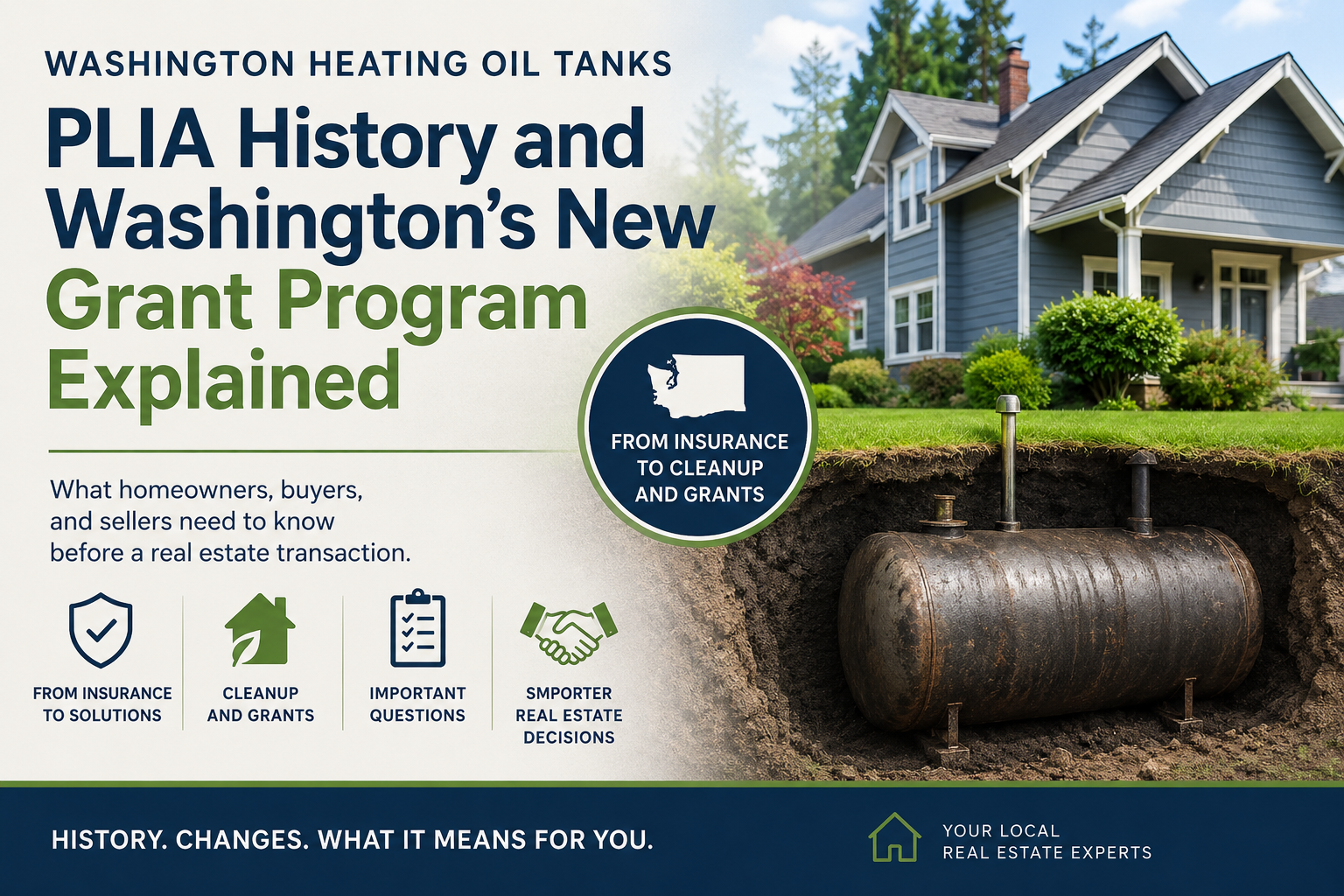
Washington Heating Oil Tanks: Why Washington Changed Its Oil Tank Program and What It Means for Homeowners
If your home—or a home you’re considering buying—was built in the mid-1900s, there’s a good chance a heating oil tank may be part of the property’s history.
Across Edmonds, Lynnwood, Shoreline, Seattle, and much of Western Washington, underground heating oil tanks were once common. Many homes originally heated with oil later converted to natural gas, electric systems, or heat pumps. In some cases, the old tank remained buried underground.
For years, Washington homeowners had an unusual safety net: a state-sponsored insurance program designed to help if a heating oil tank leaked.
That program changed recently.
Understanding that history can help homeowners avoid expensive surprises and navigate real estate transactions with more confidence.
Why Heating Oil Tanks Became a Concern
Underground oil tanks created a unique challenge:
- Many tanks were installed decades ago.
- Steel tanks eventually corrode.
- Small leaks often go unnoticed.
- Cleanup costs can quickly reach tens or even hundreds of thousands of dollars.
- Discovery of contamination can delay or derail a home sale.
Unlike gas stations and commercial fuel systems, residential heating oil tanks generally were not heavily regulated. Still, contamination could trigger cleanup obligations under Washington environmental laws.
That left many homeowners facing significant risk.
Enter PLIA: Washington’s Heating Oil Insurance Program
Washington created the Pollution Liability Insurance Agency (PLIA) in 1989. The agency initially focused on larger underground petroleum storage concerns but later expanded into residential heating oil tank assistance.
PLIA eventually introduced the Heating Oil Pollution Liability Insurance Program (HOIP).
The idea was simple:
- Homeowners registered active heating oil tanks.
- Coverage was funded through fees associated with heating oil distribution.
- If contamination occurred, cleanup assistance could be available.
The program became extremely important in Washington real estate.
For years, buyers, sellers, inspectors, and real estate brokers routinely discussed questions like:
- Is there an oil tank?
- Was the tank registered?
- Has it been decommissioned?
- Was soil testing completed?
- Was a PLIA claim ever filed?
In many transactions, PLIA reduced uncertainty and made buyers more comfortable proceeding with a purchase.
Why the Program Changed
Over time, several things shifted:
Fewer homes used heating oil
Many homeowners upgraded to:
- Natural gas
- Electric heating systems
- Heat pumps
As the number of oil-heated homes declined, participation in the program gradually decreased.
Homeowners needed different help
Historically, PLIA operated as an insurance model.
But homeowners increasingly needed assistance with:
- Tank removal
- Cleanup work
- Heating system upgrades
- Eliminating future risks entirely
The state began moving toward a different approach.
Washington’s New Grant and Loan Model
Washington recently transitioned away from the traditional insurance structure and moved toward a loan and grant-based system.
Instead of primarily insuring future contamination events, the newer approach focuses on helping homeowners address problems proactively.
The newer model can include assistance for:
- Tank decommissioning
- Cleanup costs
- Tank replacement projects
- Conversion and infrastructure work
- Environmental remediation
The goal shifted from:
"Protect homeowners after a leak occurs"
to:
"Help eliminate the risk before problems develop."
Important Real Estate Questions Buyers and Sellers Should Ask
If your property has a current or former heating oil system, questions worth investigating include:
- Is there an active or abandoned tank?
- Was the tank removed or decommissioned?
- Was soil testing completed?
- Are records available?
- Was the tank ever enrolled in PLIA?
- Were any prior claims filed?
- Are grants or assistance programs available?
These details can influence:
- Property value
- Buyer comfort
- Financing considerations
- Negotiation strategy
- Transaction timelines
The Bottom Line
Heating oil tanks are common throughout older Western Washington neighborhoods and do not automatically create a problem.
The biggest issues typically arise when a tank’s history is unclear.
Whether you are preparing to sell, considering a purchase, or simply wondering what may be buried beneath your yard, understanding the evolution of Washington’s heating oil tank programs can help you make informed decisions.
Our team regularly helps buyers and sellers navigate oil tank questions, environmental concerns, inspections, and due diligence issues throughout Edmonds, Seattle, Shoreline, Lynnwood, and surrounding communities.
Questions about an oil tank on your property? Reach out anytime—we’re happy to help.


