
What Is Senate Bill 6162?
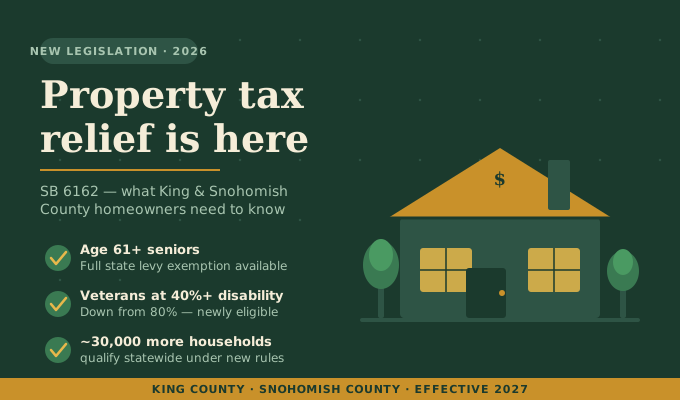
Senate Bill 6162 is a landmark overhaul of Washington's Senior Citizens Property Tax Exemption program — a decades-old program that helps lower-income seniors, people with disabilities, and qualifying veterans stay in their homes by reducing or eliminating a portion of their property tax bill.
The bill passed the state House by an overwhelming 93–2 vote and cleared the Senate 41–8 before being delivered to the Governor in March 2026. It's been called the AARP Washington's top priority bill this session — and for good reason.
The problem the bill addresses is straightforward: the old program hadn't kept up with reality. Rising home values, cost-of-living increases in Social Security, and outdated income thresholds had quietly pushed thousands of people out of eligibility even though their financial circumstances hadn't fundamentally changed. SB 6162 is designed to fix that.
The changes take effect for property taxes due in 2027.
Who Qualifies? (And What's New)
To qualify for the program, you must own and occupy your home as your primary residence. Beyond that, here's who is now covered — including some significant expansions:
You may qualify if you are:
Age 61 or older with a qualifying income
A surviving spouse age 57 or older of someone who previously received the exemption
A person retired due to disability (any age), regardless of ability to work
A veteran with at least 40% service-connected disability — reduced from the previous 80% minimum
That last point is worth highlighting: the disability threshold for veterans has been cut nearly in half. Under old law, a veteran needed an 80% VA disability rating to qualify. Under SB 6162, the bar drops to 40% — bringing tens of thousands of additional veterans into eligibility across Washington state.
The Income Threshold Is Going Up
One of the biggest changes is how income eligibility is calculated. Previously, too many residents in high-cost counties like King and Snohomish were earning slightly above the threshold — not because they were wealthy, but because their Social Security or pension cost-of-living adjustments had technically pushed them over outdated limits.
- Income Thresholds
- Old Rules: Income thresholds were based on percentages that hadn’t been updated to reflect rising median incomes — leaving many residents ineligible despite living on fixed incomes.
- New Rules: Income thresholds are recalibrated to the current county median household income, raised by 10% meaning an estimated 30,000 additional households will now qualify statewide.
- Tax Exemptions
- Old Rules: Qualifying residents were exempt only from part of the state school levy — roughly $0.73 per $1,000 of assessed value.
- New Rules: Exemption Qualifying residents at the lowest income tier are now exempt from the entire state property tax levy — a significantly larger benefit.
- Documentation to Qualify
- Old Rules: Applicants had to manually document a long list of deductible expenses to calculate “combined disposable income,” a process many found confusing and time-consuming.
- New Rules: A standard deduction option is now available: $7,500 per qualifying person, making the application faster and easier — no more itemizing every expense.
What Does This Mean for King & Snohomish County Residents?
King County already had the highest property tax exemption income threshold in the state (around $58,000 annually under previous rules), and Snohomish County wasn't far behind. Under SB 6162, those thresholds will be recalculated using updated 2025 median household income data — meaning the qualifying bar will be higher than it's been in years.
The Washington Department of Revenue is expected to publish the official updated income thresholds for every county — including King and Snohomish — by August 2026. That gives residents several months to review the new figures and apply before the 2027 tax year takes effect.
If you've been denied or didn't think you'd qualify in recent years, it's absolutely worth checking again once the new thresholds are published.
- March 12, 2026: SB 6162 delivered to the Governor
- August 2026: WA Dept. of Revenue expected to publish updated income thresholds
- 2027: New exemptions take effect for property taxes due that year
The Bigger Picture: Why This Matters
Property values in King and Snohomish County have increased dramatically over the past decade. For younger buyers, that's an equity story. For longtime homeowners on fixed incomes — retirees, disabled residents, widowed spouses — that appreciation often translates into a larger tax bill they struggle to afford.
The risk isn't abstract. Rising property taxes have pushed seniors out of homes they've owned for decades, forcing displacement in communities where they've built their lives. SB 6162 is, at its core, a tool to prevent that — to let people age in place with dignity rather than being priced out of their own homes.
Advocacy director Cathleen MacCaul of AARP Washington put it plainly: as property taxes increase and residents are on fixed incomes, covering those increases simply isn't always possible. This program is one of the most direct ways Washington helps its residents stay housed.
How to Apply
The application process runs through your county assessor's office. You'll need to apply before the deadline each year, and eligibility is verified periodically. Here's where to start:
- King County: Visit kingcounty.gov and search "Senior Exemption" — or call the Assessor's office directly.
- Snohomish County: Visit snohomishcountywa.gov and look for the Exemption Division under Property Tax Exemptions.
- Wait for the updated 2027 thresholds to be published by the WA Dept. of Revenue in August 2026 before applying under the new rules.
- Consider using the new standard deduction option ($7,500 per qualifying applicant) to simplify your application — no more itemizing medical expenses unless it benefits you to do so.
Have Questions? We're Here.
Property tax law can feel complicated — but it doesn't have to. If you have questions about whether you or someone you know might qualify under the new rules, or you'd just like more information about resources available to King and Snohomish County homeowners, reach out. We're happy to point you in the right direction.
And if this information was helpful to you, please share this post with friends, family, and neighbors who might benefit. You never know who's been quietly struggling with a tax bill they didn't realize they could get help with.